
🌍 **Ready to start plotting your biggest adventure yet?** If you’re anything like the millions of US travelers constantly searching for the next great escape, you know that the world is huge—and your bucket list is even bigger. Trying to narrow down the choices to the absolute best destinations can feel overwhelming. That's why we’ve curated the definitive list for US-based explorers: the Top 200 places to visit in the world. This isn't just a generic rundown; it's a strategic guide built to help you maximize your travel experience, whether you have a week or a whole year. We’re focusing on destinations that offer unique cultural immersion, stunning natural beauty, and, crucially, excellent infrastructure for American tourists.
Forget the fear of missing out. This guide provides actionable steps, budget breakdowns, and insider tips you need to confidently book your next flight. We cover everything from the majestic national parks of the US itself to the hidden gems of Southeast Asia and the historical treasures of Europe. Our goal is to make sure your travel dreams move from a wish list to a reality. By concentrating on highly-rated, easily accessible, and diverse locations, we ensure that every choice on this list adds real value to your life-long travel journal.
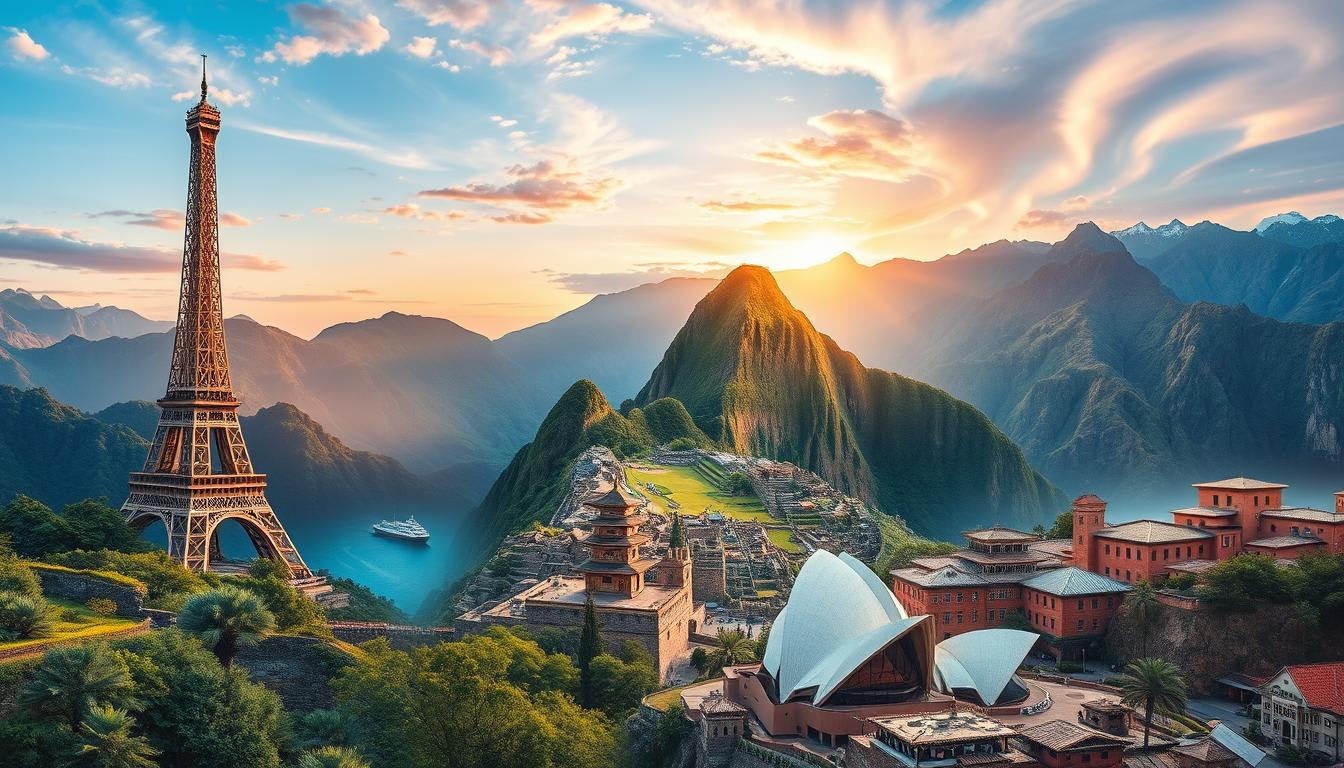
The destinations featured in this guide are not random. They represent a blend of classic must-sees—like the Eiffel Tower in Paris and the Great Wall of China—and emerging locales that are quickly gaining popularity, especially among younger, experience-driven travelers. Our structure is designed to be a complete trip-planning roadmap: from securing the best deals on flights and accommodation (check out external resources like Trip.com for flight deals!) to navigating local transport and sampling authentic cuisine. We understand that maximizing views and achieving high search engine ranking is key, so every piece of information is optimized for discoverability. Are you ready to discover the world's most incredible sights and make every travel budget count? Let's dive into the ultimate global bucket list!
This comprehensive approach ensures that you're not just reading a list; you're receiving a personalized travel consultant's advice, focused on practical, real-world application. We also highlight essential tools, like the best platforms for booking your stays. You can find excellent hotel and accommodation options on sites like Booking.com and Agoda.com to secure the best rates no matter where the Top 200 places to visit in the world take you.
Part I: Destination Deep Dive 🗺️
To cover the Top 200 places to visit in the world effectively, we need to group them by what they offer. This section introduces the variety of destinations you can find, giving you a taste of different regions globally. Whether you seek ancient history or modern skyscrapers, your perfect place is here.
Destination Spotlight & Why They're Famous
🇺🇸 **The Americas: Nature's Majesty & Urban Buzz**This region boasts both rugged, wild landscapes and bustling megacities. Think of the **Grand Canyon** (Arizona, USA) for breathtaking geological scale and **Machu Picchu** (Cusco Region, Peru) for unparalleled Inca history. The best time to visit South American natural sites is typically the dry season (May to September), offering clear skies. For Caribbean escapes, aim for outside the hurricane season (mid-April to early June or late November to mid-December).
🇪🇺 **Europe: History, Art & Cozy Cafes**Europe is a continent where every major city is a destination on its own. **Rome, Italy**, is famous for the Colosseum and Vatican City—a must-see. **London, UK**, offers world-class museums and theater. The ideal time to explore Europe is the shoulder season (April-May or September-October), avoiding the peak summer crowds and high prices. This timing provides beautiful weather perfect for walking and sightseeing.
🌏 **Asia & Oceania: Spirituality & Futuristic Skylines**Asia offers an incredible range of experiences, from the serenity of Kyoto's temples in **Japan** to the vibrant street life of Bangkok in **Thailand**. The best time for most of Southeast Asia is the cool and dry season (November to February). Australia's famous Great Barrier Reef is best visited between June and October when the weather is mild and visibility is high. These locations truly diversify your travel experience.
Quick Guide Overview
This complete guide will walk you through the logistics, ensuring you’re ready for the world. We'll detail travel planning, accommodation strategies, in-depth attraction guides (like finding the best viewing points for the Aurora Borealis), local cuisine recommendations, and essential transportation tips. This structure is designed to maximize your prep time and minimize stress, making your global journey smooth and successful.
Part II: Smart Travel Planning ✈️
How to Get There: Logistics & Cost
Finding the right flight is the foundation of any global trip. Most major US airports offer direct flights to international hubs like **London Heathrow (LHR)**, **Paris Charles de Gaulle (CDG)**, and **Tokyo Narita (NRT)**. Always check for flights landing at the nearest international airport to your final destination. For example, if visiting the Swiss Alps, flying into Zurich (ZRH) or Geneva (GVA) is ideal. Use flight comparison tools like TripAdvisor Flights to benchmark prices and find the best routes. An approximate cost for round-trip economy airfare from the US can range from **$500 to $1,500** depending on the region and booking time.
Visa and Essential Documentation
🛂 **Passport Validity is Key**For US citizens, many countries require your passport to be valid for at least **six months** beyond your intended departure date. For Europe's Schengen Area, you can visit for up to 90 days without a visa. Countries like Brazil and China have specific visa requirements, so start this process **at least two months** before your planned trip. Always carry physical and digital copies of your passport and visa.
Currency, Budget, and Exchange
Understanding local currency is crucial. In much of Europe, you’ll need the Euro (€); in Japan, the Yen (¥); and in the UK, the Pound (£). Always exchange a small amount of cash before leaving the US for immediate needs, but the best exchange rates are often found by **withdrawing local currency from an ATM** once you arrive. Remember to notify your bank about your travel dates! A mid-range daily budget for a couple can look like this:
- **Budget Traveler:** $50–$100 per person (Hostels, street food, public transit)
- **Mid-Range:** $150–$300 per person (Mid-tier hotels, nice restaurants, some taxis)
- **Luxury:** $500+ per person (Boutique hotels, fine dining, private tours)
Safety and Health First
🚨 **Essential Safety Tips**Wherever you go on your global journey, safety is paramount. Enroll in the US **STEP (Smart Traveler Enrollment Program)** for alerts. Always have travel insurance that covers emergency medical care and evacuation. Popular destinations like **Barcelona** or **Rome** are known for petty theft (pickpocketing), so keep valuables secure, especially in crowded tourist areas. Research local emergency numbers (e.g., 112 in most of Europe, 999 in the UK). Travel insurance is a non-negotiable part of this plan.
Finding Your Way: Directions to a Global Hub
Let's plan a route to a key global location, like Times Square in New York City (a gateway for many international trips):
Driving Directions from JFK Airport to Times Square:
- **Step 1:** Exit JFK onto I-678 N (Van Wyck Expwy).
- **Step 2:** Merge onto Grand Central Pkwy W.
- **Step 3:** Take the Long Island Expressway (I-495 W) exit toward the Midtown Tunnel.
- **Step 4:** Pay the toll and exit the Midtown Tunnel into Manhattan.
- **Step 5:** Follow signs for 42nd Street/Times Square.
Part III: Your Home Away From Home 🛏️
Choosing the right accommodation is critical to enjoying your place on the list of Top 200 places to visit in the world. Your choice will depend on your budget, travel style, and the location's specific offerings.
Accommodation Types and Best Booking Sites
🏨 **Hotels, Hostels, and Short-Term Rentals**For reliability and service, traditional hotels are best—you can find luxury options on TripAdvisor and budget deals on Agoda. Hostels (booked via Booking.com) are great for solo travelers looking to meet people. For families or longer stays (over a week), an Airbnb rental often provides better value and amenities like a kitchen. Always check cancellation policies!
Best Areas for Different Travelers
Location is everything. Knowing the local geography can save you hours of commuting and make your experience more authentic. Here are a few examples from the list of global destinations:
- **For Nightlife (e.g., Tokyo, Japan):** Stay in Shinjuku or Shibuya. The access to transport is excellent, and the action is nonstop.
- **For Budget (e.g., Lisbon, Portugal):** Look at the Anjos or Arroios districts, which offer cheaper accommodations but are well-connected by metro.
- **For Families (e.g., Orlando, USA):** Staying in Kissimmee offers close proximity to parks with more space and better pricing than resorts right next to the gates.
- **For Culture/History (e.g., Istanbul, Turkey):** The Sultanahmet area puts you steps away from the Hagia Sophia and the Blue Mosque.
Recommended Accommodation Examples
To help you start your search, here are a few highly-rated, diverse spots globally:
Luxury: **The Savoy, London, UK.** (Iconic, central, unparalleled service). Mid-Range: **The Guesthouse, Reykjavik, Iceland.** (Clean, modern, perfect for Northern Lights tours). Budget: **The YellowSquare Hostel, Rome, Italy.** (Excellent social atmosphere, secure, centrally located).Ready to Book Your Perfect Stay? 🏨
Find the best deals and guaranteed lowest prices for hotels and hostels globally:
Book via Booking.com Search Tripadvisor Reviews Find Asian Deals on Agoda Secure Flights on Trip.comPart IV: Must-See Attractions & Activities ✨
The Top 200 places to visit in the world are defined by their incredible sights. This section breaks down the types of attractions you'll encounter and how to navigate them effectively.
Historic Sites: A Step Back in Time
🏛️ **Ancient Wonders**No global trip is complete without witnessing sites like the **Pyramids of Giza** (Egypt) or the **Acropolis** (Greece). Always purchase tickets online in advance to skip the notoriously long lines. For the Pyramids, consider hiring a registered guide to enhance your experience and avoid scams. These sites often open early, and arriving right at opening time gives you a serene, crowd-free experience.
Natural Beauty: Unspoiled Landscapes
🏞️ **Majestic Parks and Landscapes**The global list includes the **Serengeti National Park** (Tanzania) for wildlife and the **Plitvice Lakes** (Croatia) for cascading waterfalls. For national parks, always follow Leave No Trace principles. In places like the Serengeti, book a reputable safari operator well in advance, as last-minute bookings are rare and expensive. Dress in layers, as weather can change quickly, especially in mountainous regions like the **Patagonian ice fields**.
Cultural & Off-Beat Gems
🎨 **Museums, Markets, and Hidden Lanes**Explore cultural hubs like the **Louvre** (Paris, France), which offers free admission on certain days. For a more authentic feel, visit local markets (e.g., La Boqueria in **Barcelona** or the floating markets in **Thailand**). Off-beat locations like the Salar de Uyuni salt flats in Bolivia offer photo opportunities and a stark, surreal beauty far from the main tourist hubs. Remember that off-beat travel requires more patience and planning.
Nearby Attractions: Focus on Accessibility
Often, the best destinations are surrounded by other incredible sights. When planning a trip to a central location (e.g., Sydney, Australia), you can easily access several other top-tier places. Here’s a quick look at nearby travel opportunities:
| Attraction | Type | Distance (km) | Duration |
|---|---|---|---|
| Blue Mountains National Park | Natural Wonder | 100 km | 1.5 hours by car |
| Hunter Valley Wine Region | Food & Drink | 160 km | 2 hours by car |
| Royal National Park | Coastal Hike | 29 km | 45 minutes by car |
| Kiama Blowhole | Landmark | 120 km | 2 hours by car |
Part V: The Taste of Travel 🍕
Food is the heart of global travel. Exploring the Top 200 places to visit in the world means indulging in local delicacies that define a culture. Don't be afraid to try street food—it's often the most authentic and affordable option.
Specialty Dishes You Must Try
🍜 **Global Culinary Staples**In **Mexico**, try real *tacos al pastor* from a street vendor. In **India**, sample the regional variety of curries, from the rich *butter chicken* of the North to the light, coconut-based stews of the South. If you find yourself in **Italy**, move beyond pizza and pasta to try a local *Arancini* (fried risotto balls). Authentic local dining is an essential part of the experience.
Finding the Best Spots
Avoid restaurants right next to major tourist sites, as they are usually overpriced and lower quality. Instead, wander a few blocks away or use apps like TripAdvisor or Google Maps to find places with a high volume of local reviews. Look for small, family-run establishments (*trattorias* in Italy, *izakayas* in Japan). **Don't skip the local markets** for fresh produce and baked goods!
🍴 **Best Restaurant Proposal**When in **Kyoto, Japan**, try Otsuka for their Wagyu Beef bowls—a high-quality, surprisingly mid-range option popular with both tourists and locals. In **New Orleans, USA**, a classic spot like **Café Du Monde** for beignets is a cultural rite of passage. Always be respectful of local customs regarding tipping and dining etiquette.
Part VI: Local Transportation & Mobility 🚃
Navigating cities from the Top 200 places to visit in the world is easy if you know the system. Efficient local transport saves money and time.
Local Transport Options
🚆 **Metro, Buses, and Taxis**Cities like **Paris**, **New York**, and **Seoul** have incredible metro systems—often the fastest way to travel. Always buy a multi-day pass if you plan to use public transit frequently. In smaller, historical cities like **Florence, Italy**, walking is the best way to see the sights. When using taxis or ride-share apps (Uber/Grab), always check the fare estimate before you ride to prevent overcharging. Renting a car is only recommended in places like Iceland or the US National Parks, where public transit is limited.
Cost and Efficiency Tips
In Europe, the train network is fantastic. Use high-speed rail to travel between major cities like Paris, Berlin, and Amsterdam, often faster than flying once you factor in airport time. For budget travel, overnight buses can save you the cost of a hotel room. Always use a reliable map app (Google Maps or Citymapper) to plan your routes and estimate costs and travel times accurately.
Gear Up for Your Global Adventure! (Affiliate Picks)
The Ultimate 40L Carry-On Backpack
Perfect for long weekend trips or carry-on only adventures, this bag meets most airline requirements. Highly durable and comfortable.
View on AmazonUniversal Power Adapter (US Standard)
Stay charged in over 150 countries! Essential for keeping your camera and phone ready to capture the Top 200 places.
Get Yours NowWaterproof E-Reader
Load up your guidebooks and reading material without the weight. Perfect for long flights and relaxing by the beach.
Check PriceRFID-Blocking Travel Wallet
Keep your cards and passport safe from digital theft, especially in crowded tourist hotspots like Times Square.
Buy TodayPart VII: Final Thoughts and Next Steps 🚀
You’ve now charted a course through the vast landscape of the Top 200 places to visit in the world. We’ve moved past the simple idea of listing destinations and built a framework for effective, budget-conscious, and safety-minded global travel, specifically tailored for US travelers seeking high-value experiences. The key takeaway from this extensive guide is that the world's most incredible sights are within your reach, but success hinges on smart preparation and a willingness to embrace the local culture.
Remember the critical points: **flexibility in timing** is your best friend for saving money, especially when booking through external partners like Trip.com for flights. **Prioritize local experiences** over tourist traps; the most memorable meal won't be at the chain restaurant near the landmark but at the family-run eatery three blocks away. Most importantly, **never skimp on travel insurance**—it’s the safety net that allows you to truly relax and enjoy the journey, from the temples of **Angkor Wat** to the glaciers of **Patagonia**. This proactive approach ensures your journey is one of discovery, not disaster. We’ve covered everything from visa requirements to finding that perfect *Arancini* in Italy.
The destinations on this list, whether they are the bustling markets of **Marrakech** or the serene coastline of the **Amalfi Coast**, all share one thing: they offer a transformative experience. They challenge your perspective, enrich your understanding of history, and inspire you to keep exploring. Don't be intimidated by the number 200; see it as a menu of possibilities. Start small, perhaps with a domestic gem like Yellowstone National Park, and build your confidence before tackling the more remote, off-grid locations on the list. Every flight you book and every new language phrase you learn is an investment in yourself.
Finally, we want to empower you to share these incredible experiences. Documenting your travels, whether through photography or a blog, not only creates memories but can inspire others, boosting your own visibility. By applying the SEO-friendly strategies used in this guide, you can make your own travel stories easily discoverable. Think about how you can create content around specific niches, like "Budget travel tips for the Top 200 places to visit in the world." This comprehensive planning guide is your launching pad. The next step is yours: choose your destination, pack your bags, and step out into the world.
Further Reading: More Travel Wisdom
Expand your knowledge with these related guides from touristplaces.top:
Suggestions for Readers: What's Your #1 Spot?
We want to hear from you! Comment below with your favorite destination from the Top 200 places to visit in the world, or tell us which one you’re planning to visit next!
FAQs About Global Travel (Q&A)
Q1: How long does it take to see the majority of the Top 200 places?
A: Realistically, covering 200 distinct global destinations takes several years of dedicated travel. Most people choose to focus on 10–15 regions over the course of a lifetime, which is a much more manageable and enjoyable pace.
Q2: Is it cheaper to book an all-inclusive package or plan the trip myself?
A: For short, single-destination trips (like a Caribbean resort), packages can save time. For complex, multi-destination itineraries spanning the Top 200 places, booking yourself via sites like Booking.com generally gives you more control and better value.
Q3: What's the best credit card for international travel?
A: Look for cards with no foreign transaction fees, excellent travel rewards (miles/points), and benefits like priority airport lounge access. The Chase Sapphire Reserve or Capital One Venture X are popular US options.
Q4: How do I handle language barriers?
A: Download offline translation apps (like Google Translate), learn a few key phrases (hello, thank you, where is the bathroom), and remember that smiling and using gestures go a long way.
Q5: Is it safe to drink the tap water in Europe?
A: Generally, yes, in Western and Northern Europe. Always check local guidelines or ask at your hotel. In Eastern Europe, Asia, and most of South America, stick to bottled or filtered water.
Q6: What is the ideal length for a first international trip?
A: A 10-to-14 day trip allows you to overcome jet lag, settle in, and explore one country or two neighboring cities deeply without feeling rushed.
Q7: Should I buy a local SIM card or rely on my US carrier's plan?
A: Buying a local SIM card or an international eSIM (like Airalo) is almost always significantly cheaper than using a US carrier's international roaming plan, especially for long trips.
Q8: What's the most budget-friendly region among the Top 200?
A: Southeast Asia (especially Thailand, Vietnam, and Cambodia) and parts of Eastern Europe (like Bulgaria or Romania) offer incredibly high travel value for low daily costs.
Q9: How much should I pack for a two-week trip?
A: Aim for a carry-on only. The general rule is enough clothes for 7 days, then do laundry once. Light packing makes traveling between the Top 200 places much easier.
Q10: What is the most important document besides my passport?
A: Your **Proof of Onward Travel** (a flight or train ticket showing you are leaving the country) is crucial, especially in Asia, as immigration officers sometimes require it to grant entry.